
Recasting the Rural
To regain public trust, colleges and universities should rethink their relationships with rural America


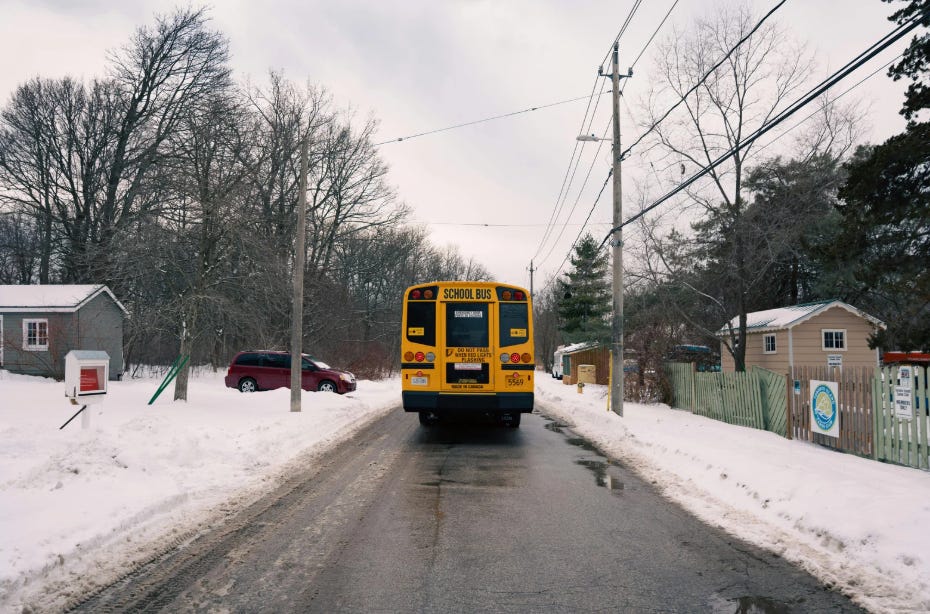
Higher education has a public trust problem. In searching for solutions, we should consider colleges’ and universities’ complex relationship with rural America.
We already know that, while the 20% of Americans who live in rural areas graduate high school at higher rates than their non-rural peers, they go to college significantly less often. Now, a new book offers a thought-provoking analysis of how selective, four-year institutions that attract a large national pool of applicants interact with rural students and rural communities. Its message: higher education may uplift individuals, but it can often do more to understand and support the places they come from.
In Educated Out: How Rural Students Navigate Elite Colleges -- And What It Costs Them, Bates College education professor Mara Casey Tieken interviews nine students, representing a diverse cross-section of rural America, who attend an elite Northeast private institution. Tieken describes a culture shock common to her interview subjects that is rooted in their rural identity: for these students, the worlds of college and home “operate according to different norms, values, and assumptions.” Political and linguistic differences, challenges with academic preparation, and a sense of “not knowing what you don’t know” shape rural students’ often-fraught transitions into and experiences with higher education. Unfortunately, rural students are often left to navigate these uncharted waters on their own – left to rely on sheer grit if they are to persist in elite college spaces where they don’t feel fully included.
While the personal challenges for students are significant, the broader consequences for their communities are perhaps even more so. For rural students, many nationally-selective institutions have built an access agenda around one-way movement; research has shown that rural graduates are generally unlikely to return home. And graduates of highly selective institutions are 161% more likely than those from less selective schools to leave their native states after they graduate. As Tieken puts it, “place shapes opportunity, and place also suffers the consequences of that opportunity.”
This outflow of opportunity, talent, and resources from rural communities to colleges and universities likely contributes to what political scientist James R. G. Kirk calls a “geography of trust,” with rural residents being less likely than their urban counterparts to trust large institutions that feel distant, unrelatable, and unaccountable. As political scientist Katherine Cramer documented in The Politics of Resentment, higher education is a key part of that narrative, with many rural Americans skeptical even of public universities just a few hours away in their own state.
This is a tough challenge, particularly for nationally selective institutions located far from the communities many of their students grew up in. In part, it’s just a messaging problem. Colleges and universities do in fact provide many benefits to rural communities – including serving as anchor institutions, providing relevant training for the local workforce, supporting healthcare needs, and providing a venue for the arts and other cultural activities – and in communicating higher ed’s value, it’s worth emphasizing those benefits.
But there’s also some truth to these critiques. As scholar Michael Corbett writes, for rural Americans, college is too often “invisible training for invisible jobs in an elsewhere economy.” To revitalize rural trust in higher education, institutions that draw students, legitimacy, and knowledge from rural America should be willing to adopt some responsibility for building durable, reciprocal connections with rural communities.
The solution isn’t merely to emphasize the benefits a degree can confer on individual students, real though they are. As Tieken’s interviews demonstrate, rural parents, students, and teachers generally recognize that a degree provides options that would be otherwise unavailable. For rural students and their communities, what’s missing is trust that those benefits will be realized without insurmountable or unnecessary barriers, and that higher education will lead to local, visible, and meaningful improvements in their communities.
Tieken, Shaneka Williams, and others propose several solutions for nationally selective colleges and universities: increasing admissions visits to rural schools, creating partnerships with community colleges to enhance pathways to four year institutions, revising admissions processes, and more. Some institutions and programs are already doing this well: the 32 selective partner universities of the STARS College Network, for instance, have committed to connecting with and supporting rural students and communities through projects such as the College Advisor Program. Elite private universities can also develop research initiatives that partner directly with rural communities, such as Harvard’s National Center for Rural Education Research Networks.
Ultimately, if colleges and universities truly want to build trust with rural communities, they should be welcoming to rural students’ identities and cultures and should embrace place-based, reciprocal partnerships in the places their students live. Higher education can benefit from paying more attention both to where it comes from and where it wants to go.